
We were delighted to sit down this month with our board chair, Jeanne Friebe, BSN,…

Sami’s Story

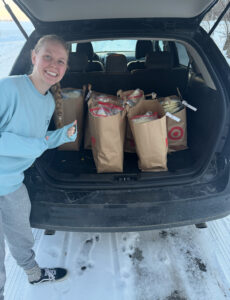
My Breastfeeding Story
by Sami E.
Lots of first-time moms don’t give breastfeeding too much thought during pregnancy — I definitely didn’t. “Who knows if I’ll even be able to produce breast milk,” I used to think. Ha! Underproducing clearly didn’t end up being an issue…
But, there were issues with breastfeeding that I faced. And, it was incredibly jarring when every second of every day suddenly revolved around something that I had previously given little to no thought about.
Like so many moms, I had trouble getting a proper latch with my son. In fact, he was given donor breastmilk at the hospital to ensure he was getting enough, a token I would not forget.
It’s so hard in those early days. Is the baby cluster feeding or starving? Should I supplement with formula or will it cause nipple confusion? Is the baby losing too much weight? Meanwhile, the hormonal shift, lack of sleep, and postpartum recovery is so taxing that I was slurring my words when I spoke to the nurses.
My baby wasn’t getting enough milk from me. His bilirubin and his weight quickly became a concern. We had to visit the pediatrician every day. Each time, they’d check his bilirubin with a “foot poke” (that’s their nice way of saying a blood draw). It was miserable. My husband and I were told to give him formula and that I could try breast pumping. I felt like I was failing my child. Freshly postpartum and fragile, I sobbed and sobbed.
After I figured out pumping, things started to get better. It didn’t take long before my milk came in and boy, did it come in! I pumped on a low setting for 20 minutes every 3-4 hours, and yet I was making 16 oz each session.
Still, I continued trying to breastfeed with a bad latch, leaving my nipples red, cracked, chapped, and raw. Everyone was asking when they could see the baby and all I wanted to know was when I could wear a bra without pain.
Fearing infection, I decided to exclusively pump. I was grateful to be providing my child with crucial antibodies, perfect nutrition, easier digestion, and lower risks for infections (ear, gut, respiratory) and long-term issues like asthma, obesity, and diabetes, while also reducing SIDS risk. But, while we were technically saving on formula, exclusively pumping and over producing certainly came at a cost.
In addition to washing pump parts and bottles non-stop, always feeling engorged, and getting painful clogged ducts, I experienced Dysphoric Milk Ejection Reflex (DMER), a physiological phenomenon during breastfeeding where a parent experiences a sudden wave of negative emotions. For me, those “negative emotions” were an intense rage, as if I had just been punched or shoved. It was only made worse when my baby would cry and the pumps on my chest prevented me from being able to soothe him.
Doing this for twelve weeks felt like an impossible task and at the back of my mind I couldn’t help but wonder how in the world any woman could breastfeed for 6 months to a year or more.
I owe a huge thank you to my incredible husband and mom for getting me as far as I got with breast pumping. Without their incredible support, I surely could not have continued producing breast milk. I’m also incredibly grateful for the maternity leave my employer offered and to be living in a state that is now offering paid family medical leave to help moms get the start they need. Finally, the support of so many amazing women and moms in my life has meant the world to me. A “you got this” text or a meal left at the door goes a long way in the “newborn trenches.”
I am proud to have given my son breast milk for 5 months before choosing to wean off of breast pumping. No matter where you are at in your feeding journey, remember that fed is best. Breastfeeding isn’t just a physical act, it can impact your body in many ways — even causing sore joints!
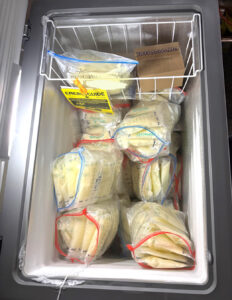
Once I was done breastfeeding, I initially intended to continue feeding my baby with the excess breast milk I had frozen. But, I soon learned about a natural enzyme in breastmilk called lipase that helps babies digest fats, crucial for energy and brain development. The problem is that storing breast milk in the cold can lead to high levels of lipase, which can make breastmilk taste and smell soapy or metallic. While harmless to the nutritional value, this can create a taste change that leads some babies to reject the milk. This was the case with my son, so we began transitioning him to formula.
Choosing to donate seemed only natural at that point. I called the hospital I had given birth at and asked how I could supply other struggling infants with breast milk. They directed me to the Minnesota Milk Bank for Babies.
The Minnesota Milk Bank for Babies (MMBB) is a non-profit organization that provides safely pasteurized donor breast milk to medically vulnerable infants (typically babies who are in NICUs) when a mother’s milk is unavailable. Many of these babies are fed through a tube, so the lipase levels are not a concern.
The screening process for donors was very straight forward and included health questionnaires and a blood test.
I’m so grateful to be able to pay forward the help I received for my son by supplying medically fragile infants with this gift.

Related Posts